Mujtama
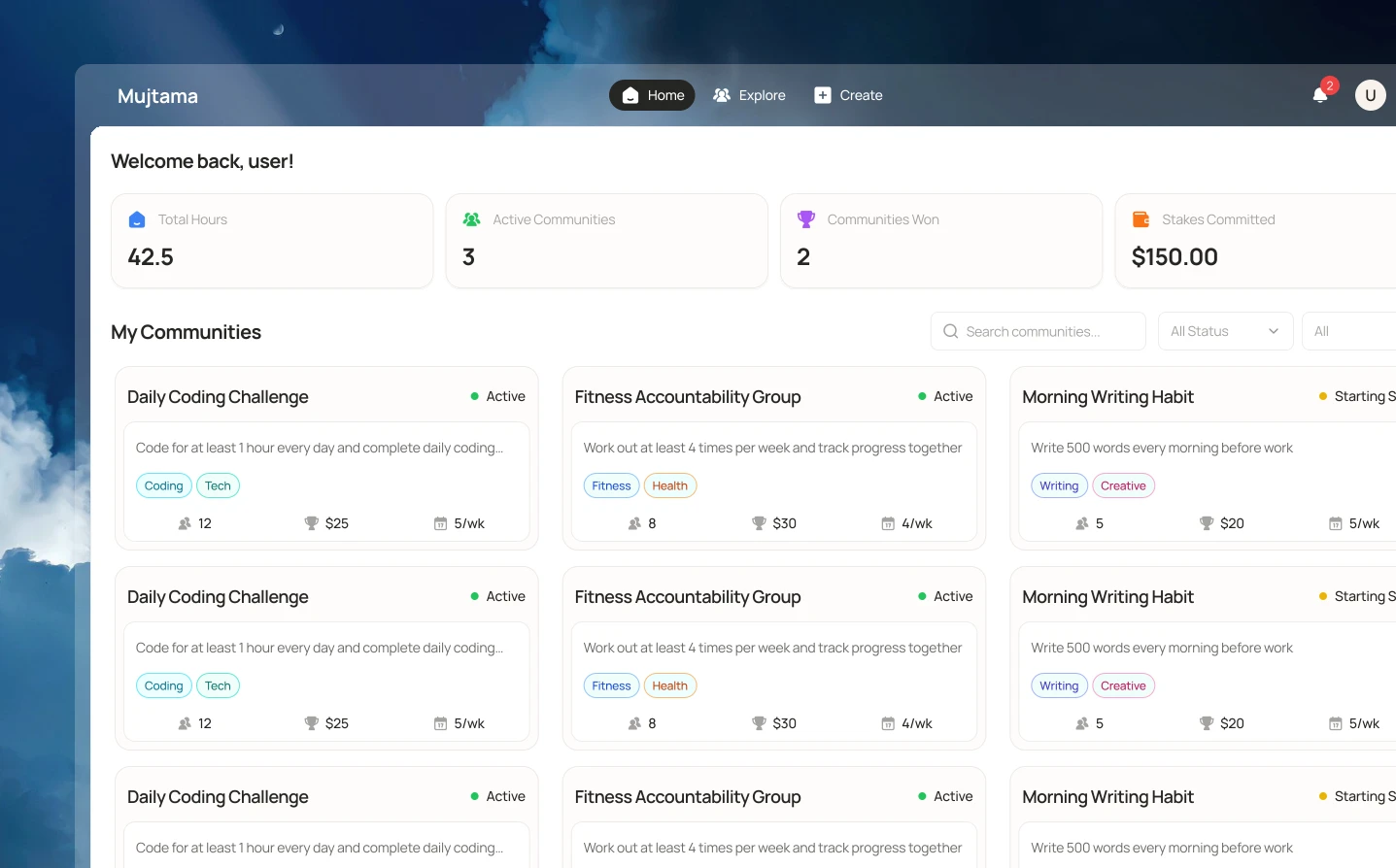
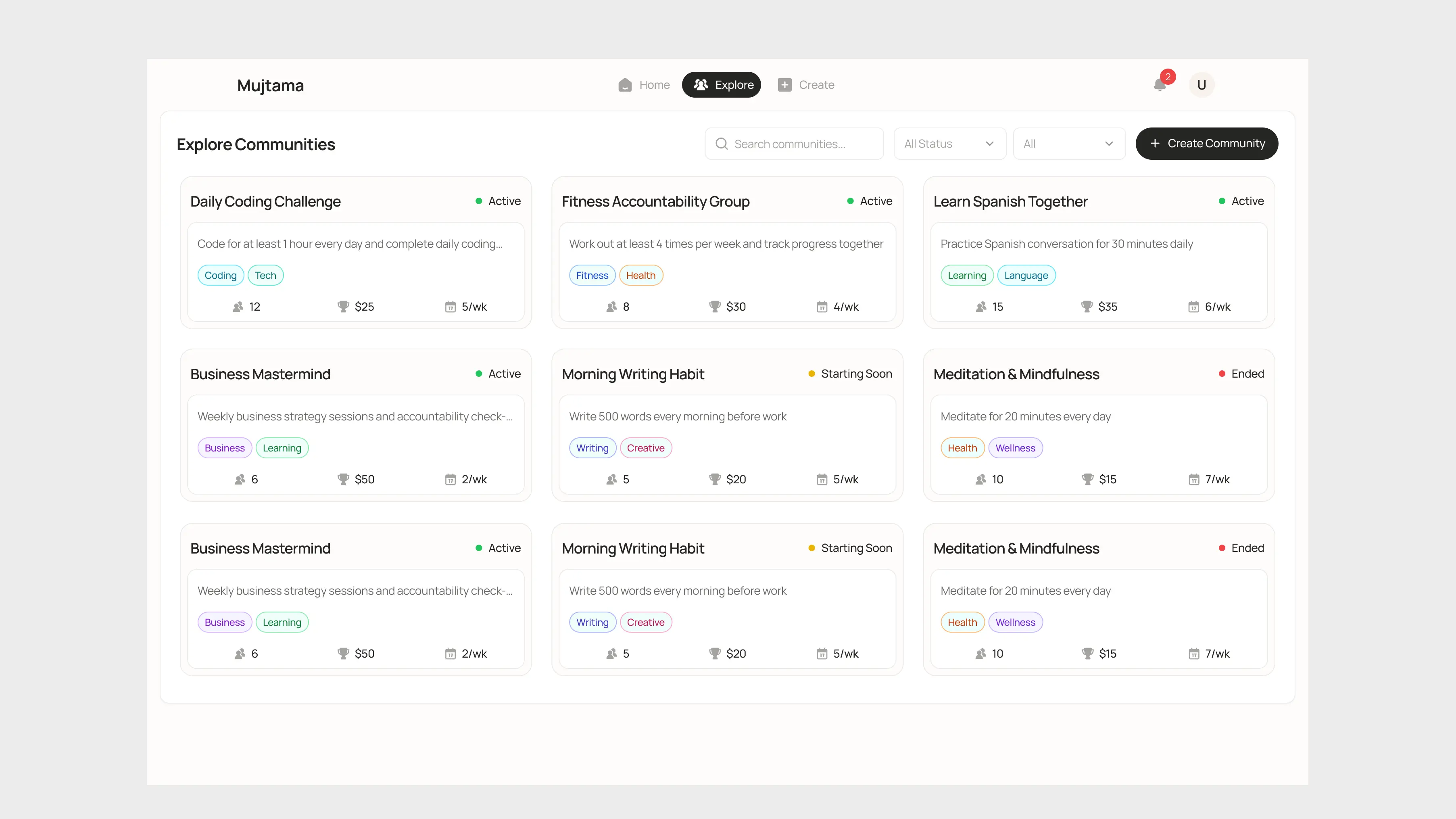
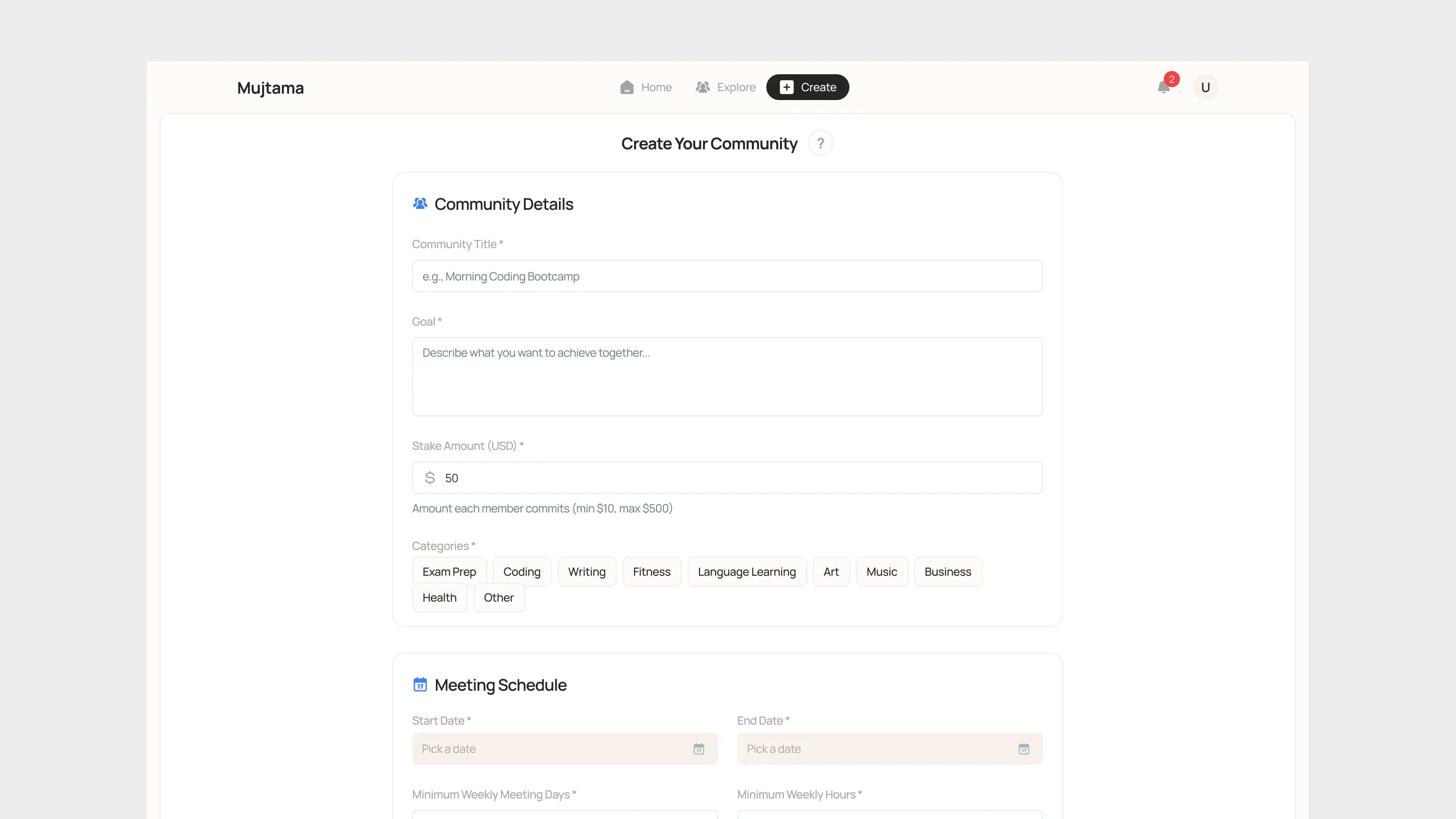
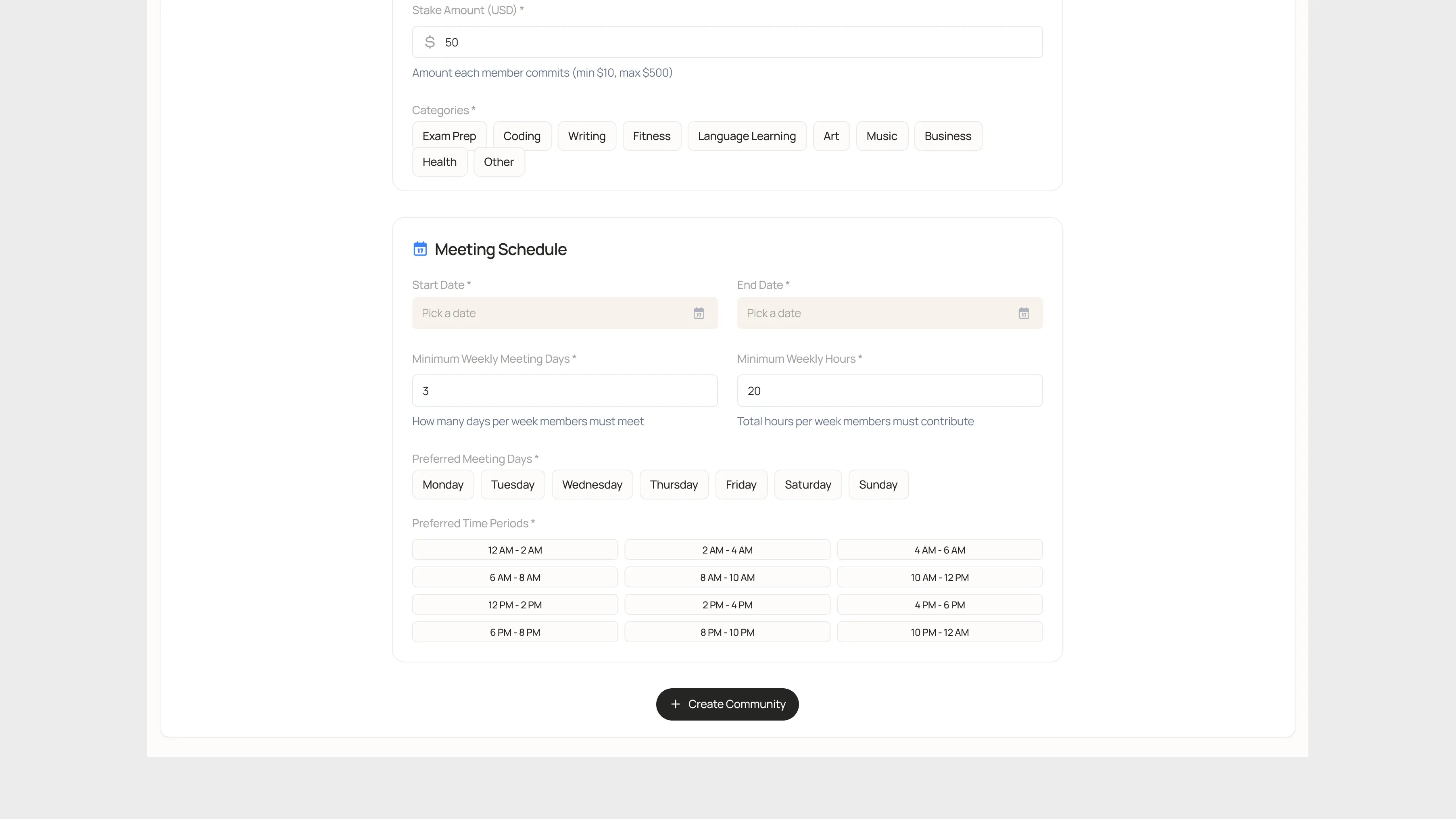
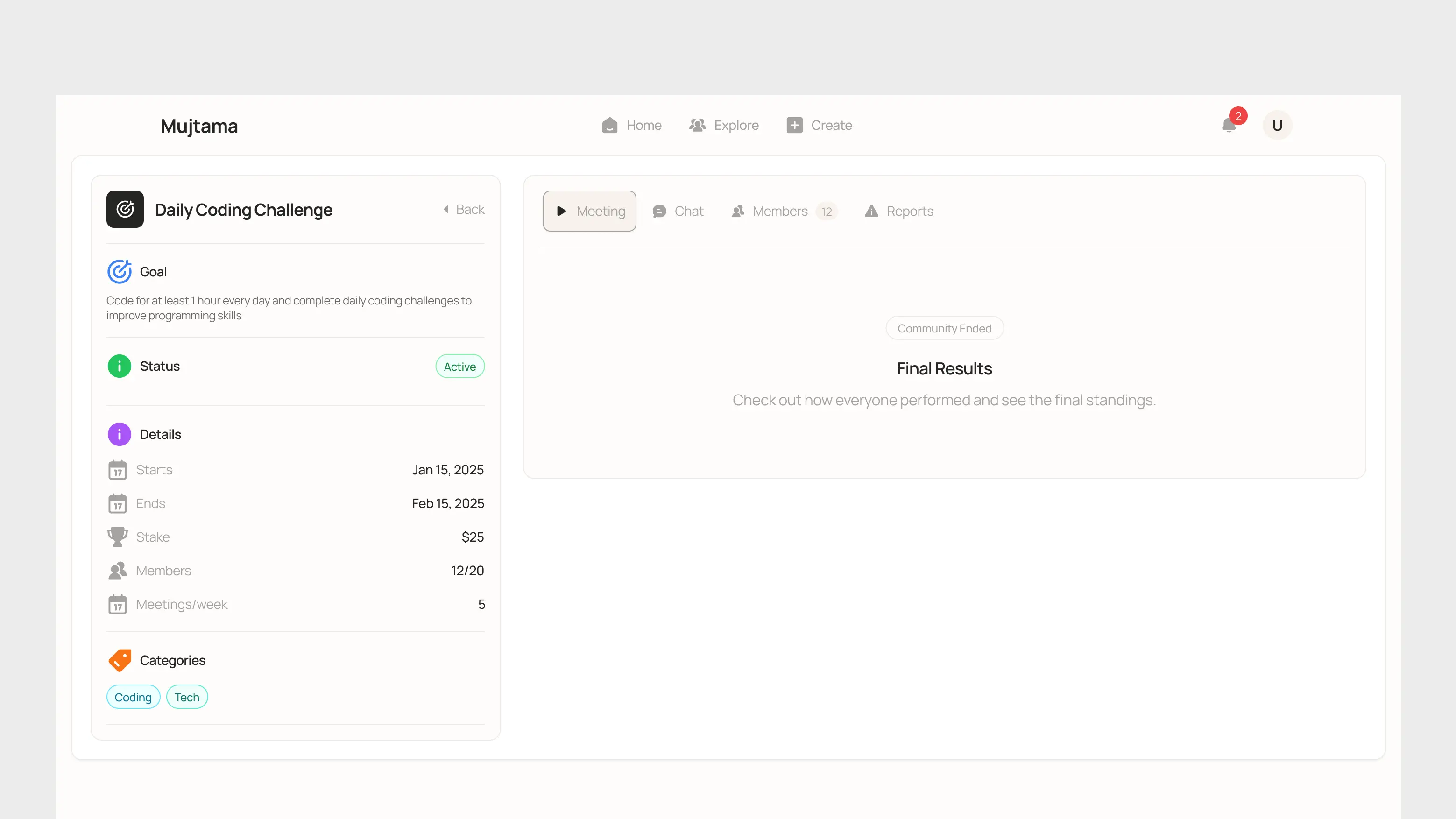
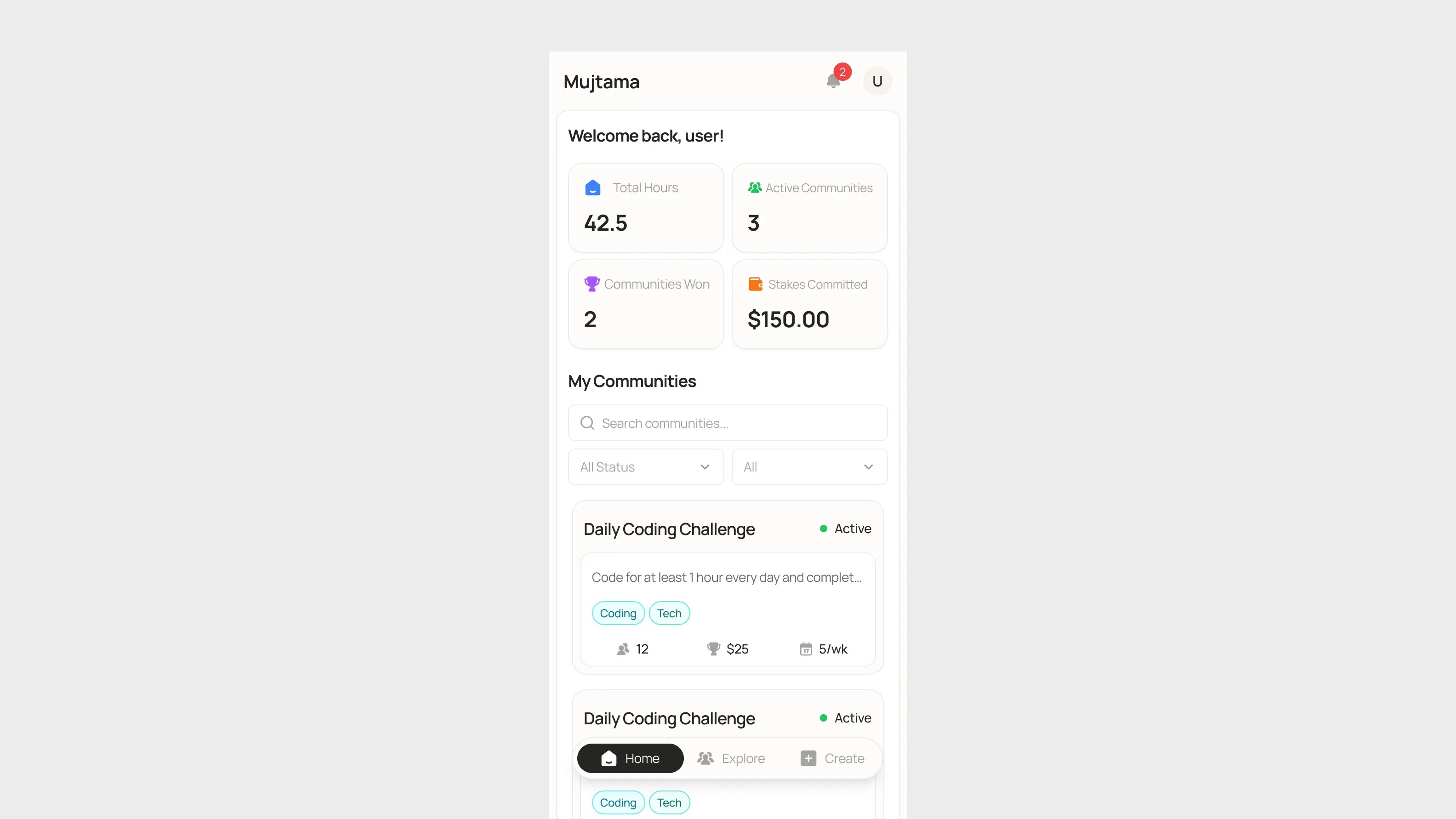
Mujtama is an accountability community platform where users stake real money to join goal-focused groups, attend weekly live video meetings, and prove they are working toward their goals or lose their stake.
- UI/UX overhaul and design system built from scratch
- Frontend architecture refactor for Supabase Realtime and WebRTC video
- Gamification UI: badges, leaderboards, streak tracking, and progress dashboards
- Community lifecycle management and dispute reporting system
Mujtama is built around a high-stakes premise: users stake real money ($10–$500) to join goal-focused communities — fitness, coding, writing, music, and more — and must attend weekly live video meetings to reclaim it. The MVP had been scaffolded with AI tooling and quickly outgrown its foundations. We were brought in to rebuild: establishing a coherent design system from scratch, refactoring the frontend architecture, and making the codebase capable of handling what the product actually required — WebRTC peer-to-peer video meetings, Supabase Realtime community chat, badge automation, leaderboards, and a community lifecycle system that automatically qualifies or disqualifies members based on meeting attendance data.
Every screen felt inconsistent because there was no design system — just ad-hoc styling decisions accumulated over time. More critically, the architecture was not structured to support real-time features reliably: WebRTC P2P video, Supabase Realtime WebSocket chat, typing indicators, online presence, and a dispute resolution system where community members vote to disqualify rule-breakers. Rebuilding the frontend properly meant making deep architectural changes without disrupting existing product logic — which required fully understanding the codebase, including the Supabase Edge Functions handling meeting management, notifications, and vote tallying, before touching anything.
Mujtama now runs on a clean, production-ready frontend with a consistent design system and an architecture that supports live WebRTC video meetings, real-time chat with reactions and presence, a community vote-based dispute resolution system, automated badge awards, global leaderboards, streak tracking, and creator analytics — without technical debt getting in the way of what comes next.